Someone asks you, half-joking, "so what's the most private messaging app?" and you give the honest answer: it depends what you're actually afraid of. If your threat model is a nosy sibling, anything works. If it's a company building ad profiles from your conversations, half the apps on your phone are disqualified before you even open the settings. And if you genuinely need to be untraceable, almost everything you already use is out.
That gap between "encrypted" and "private" is where most people get lost, and it's the reason I stopped trusting the usual top-10 lists. They rank apps by feature count, not by what leaks. So let's split the question properly and look at the best encrypted messaging apps that respect privacy in 2026 — with the criteria that actually decide it.
Key Takeaways
- Signal remains the safest default for content privacy: open source, end-to-end encrypted by default, minimal metadata retention.
- Encryption of the message is only half the job — metadata (who talks to whom, when) often survives even when the text doesn't.
- Fewer than one in five people I've helped audit their setup had end-to-end encryption switched on in their main chat app. Defaults, not features, decide your privacy.
- Session and SimpleX go further by dropping the phone number — useful for anonymity, less useful for daily life.
- For couples and small groups, the winning move is rarely "which app" but "which app you both actually use and lock down."
- Wire and Element suit organisations that need compliance, not anonymity.
What makes an encrypted messaging app actually private
End-to-end encryption means the server can't read your messages. Good. But it says nothing about what the server still knows: your phone number, your contact list, the time you messaged, how often, from which IP address. That data is a map of your social life even if every word stays sealed.
Here's what I actually check now, and it takes about ten minutes per app:
- Is the source code public and recently audited? An app nobody independent has reviewed recently is a promise, not a proof.
- Where does the company sit legally? A jurisdiction that can compel data retention changes what the encryption is worth.
- What does it do with metadata? Signal keeps almost none; WhatsApp keeps a lot and shares some with its parent company.
- Is encryption on by default? Telegram's "secret chats" are opt-in and don't cover groups.
- Do you need a phone number? That single field re-identifies you even if everything else is anonymous.
The blind spot nobody lists
I once helped a friend migrate her whole family to an app with flawless end-to-end encryption, then watched her give it her real phone number and import her entire address book. Content: sealed. Who-talks-to-whom graph: perfectly readable. That was the day I stopped treating "E2EE" as the finish line and started treating it as the starting block.
Best encrypted messaging apps in 2026: an honest comparison
Below is how the serious contenders stack up on the criteria above. I've grouped them by what they're good for, because "best" without a use case is meaningless.
| App | Encryption | Phone number needed | Open source | Best for |
|---|---|---|---|---|
| Signal | E2EE by default, all features | Yes | Yes | Everyday private messaging |
| Session | E2EE, onion routing | No | Yes | Anonymity |
| SimpleX | E2EE, no user IDs at all | No | Yes | Untraceable contacts |
| E2EE, on by default | Yes | No | Privacy with people who won't install anything else | |
| Telegram | Secret chats only; cloud chats are not E2EE | Yes | Partially | Large public channels, not secrecy |
| Wire | E2EE, audited | No (email/username) | Yes | Teams with compliance needs |
| Element (Matrix) | E2EE, federated | No | Yes | Self-hosters and organisations |
| Viber | E2EE by default | Yes | No | Nothing you can't do better elsewhere |
Two things jump out from that table. First, the apps with the strongest anonymity (Session, SimpleX) are also the ones with the fewest people on them, so networking effects work against you. Second, the "encryption on by default" column is where Telegram quietly drops out of contention as a private messenger — which brings us to the most common question I get.
Which app has the best encryption?
For content encryption, Signal Protocol — the protocol behind Signal itself — is the one most serious people point to, and it's been independently examined repeatedly over the years. Signal's own app uses it everywhere, including groups, calls and file transfers, and it's the same underlying encryption WhatsApp and (for secret chats) others have borrowed. If your question is "which encryption is strongest," the honest answer is that Signal's protocol is the benchmark most security researchers treat as the standard, and the surrounding app is designed to keep as little as possible.

But "best encryption" is the wrong question, because the math is rarely the weak link. The weak link is everything around it: your unlocked phone, your phone number, the backup, the contact who screenshots. I've seen a perfectly encrypted app defeated by a cloud backup that wasn't encrypted at all. That's not Signal's fault, but it's the failure you'll actually live through.
Is Signal the most secure messaging app?
For most people, yes — it's the most secure choice they can realistically adopt. Open source, end-to-end by default, no ad business model to fund, and a strong track record of resisting data requests precisely because it holds so little. My one caveat: "most secure" and "most private" aren't identical. Signal keeps your phone number as your identifier. If anonymity from an adversary who knows your number is your goal, Session or SimpleX serve you better. I'll die on the hill that Signal is the best default, not the best edge case.
Which is safer, Viber or Telegram?
Viber, on the encryption question, because its one-to-one and group chats are end-to-end encrypted by default. Telegram is not: the standard cloud chats, group chats and channels are encrypted in transit but stored readable on Telegram's servers, and only the opt-in "secret chats" are truly end-to-end — and those are one-to-one only. So someone reading your conversation at the company is possible on Telegram in a way it isn't on Viber by default.
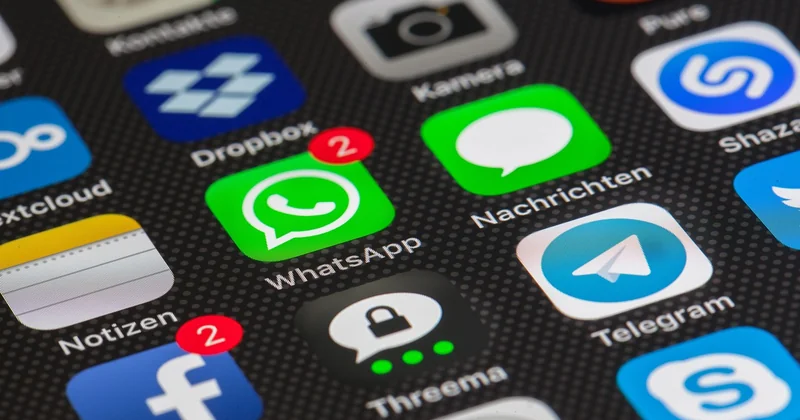
The catch is that Viber, while encrypted, is closed-source and collects data for its parent company. So the accurate sentence is: Viber is safer than Telegram for confidentiality of message content, and neither is a privacy-first app compared to Signal or Session. If those are your only two options, pick Viber for secrets and treat Telegram as a public broadcast tool.
What is the best app for encrypted private chats?
Signal. If you do nothing else after reading this, install it and get the three or four people you message most onto it. That's not a compromise answer — it's the app I recommend when I can only recommend one. The onboarding is genuinely easy, the encryption is on by default, and you don't have to think about settings.
The real obstacle is social, not technical. I spent weeks trying to move a group chat off a data-hungry platform and failed twice before succeeding on the third attempt — not because Signal was hard, but because one or two people refused to add a fourth app to their phone. The trick that finally worked: I moved a single conversation, one person at a time, rather than announcing a mass migration. Social graph inertia is the most underrated privacy problem there is.
What's the best private chat app for couples?
Signal again, with one addition: enable disappearing messages. For two people sharing daily life, the risk isn't state surveillance — it's a lost phone or a shared screen. A time-based auto-delete you both accept covers most of that. If you want to be untraceable even to each other's contact lists, SimpleX is the more extreme pick, and I've used it for exactly that reason on a couple of sensitive collaborations. It's fiddly. It works.
What texting app is not traceable?
Honest answer: no app makes you fully untraceable, and anyone selling that is selling a fantasy. But two get close if your threat model justifies the friction. SimpleX has no user identifiers at all — there's no account, no phone number, just one-time invitation links, so there's nothing to correlate on the server side. Session uses no phone number and routes traffic through a decentralised network.
Both come with real costs. Fewer contacts, slower onboarding, and a learning curve that made me want to throw my phone across the room the first evening. If what you actually need is untraceable for a specific conversation, and not a lifelong identity, they're worth the pain. If you just want to stop being profiled, save yourself the trouble and use Signal.
The setup that actually holds
Pick Signal as your daily driver. Turn on disappearing messages for sensitive threads. Lock the app behind your phone's biometrics. Check whether your backup is encrypted, because an unencrypted backup undoes everything. If a specific situation calls for anonymity, keep Session or SimpleX installed for that one purpose and don't mix it with your real identity.
Then do the part almost nobody does: audit your existing chats. Most of the risk doesn't live in the app you're about to install — it's in the nine conversations you're already in on platforms that monetise them. Migration is boring, gradual, and social. That's precisely why it works.
So when someone asks you which app is most private, don't name one. Ask what they're protecting and from whom. The answer that follows is the only one that matters.