You have probably already done the easy part. You switched to Linux, killed the telemetry, maybe even moved to a distro that ships without a single proprietary blob. And then someone asks you "so, are you anonymous now?" — and you hesitate. Because deep down you know the honest answer: no, not really. Running a privacy-friendly desktop and being anonymous on the network are two entirely different projects, and most "best privacy distro" lists blur them together without a warning.
That confusion costs people real damage. I've watched someone in a journalism workshop I helped run spend two days hardening a perfectly tame Ubuntu install, then log into a personal Gmail account on it and lose the whole point in nine seconds. The distro was fine. The model of the threat was wrong.
So here is how I actually sort the best Linux distributions for privacy and anonymity in 2026: by separating what you're hiding from (a data broker, an ad network, your ISP, a state-level adversary) from what tool is built for that fight. If you want to skip the reasoning and grab the short version, the table is below.
Key Takeaways
- Three objectives, three toolsets: privacy (no telemetry, no data collection), security (resistance to compromise), anonymity (nobody can tie activity back to you). Conflating them is the most common error.
- Qubes OS is the strongest privacy/security architecture available to an individual — and the most demanding to live with.
- Tails and Whonix are the only realistic anonymity setups, because they force traffic through Tor by default. Everything else is privacy, not anonymity.
- A "privacy distro" that you use to check a personal inbox is not a privacy distro. Your behaviour breaks it faster than any missing hardening step.
- For everyday use, Fedora, Debian and Linux Mint are perfectly reasonable — with the right settings and the right expectations.
- Torvalds' own preference is not a privacy recommendation; it's a maintainer's convenience choice, and treating it as guidance is a category mistake.
Privacy, security, anonymity: three fights, not one
Privacy means your data doesn't leak to parties you didn't choose. Security means nobody can break in. Anonymity means nobody can attribute the activity to you, even if they're watching the network. A distro can be excellent at the first, mediocre at the second and completely useless at the third. Debian is a superb privacy choice and a terrible anonymity tool, because the moment you connect to a server that knows your name, the whole chain collapses.
What actually separates them in practice
Four technical levers matter, and they're not all present in the same distro:
- Absence of telemetry — no default phone-home, no crash reporting you didn't ask for, no account required at install.
- Network routing by default — whether traffic can leave your machine outside a tunnel without you noticing. This is where Tails and Whonix differ radically from everything else.
- Compartmentalisation — the ability to run a hostile PDF and a banking session on the same machine without them ever meeting.
- Reproducible builds and signed, transparent release processes, which tell you the binary matches the source.
Most distro listicles only score the first one. That's why they all end up recommending the same five names in a slightly different order.
Best Linux distributions for privacy and anonymity, compared
Here's the table I wish I'd had when I started. I'm scoring on what each distro is architecturally designed to do, not on what a well-configured version of it could theoretically achieve.
| Distribution | Primary goal | Anonymity built in | Daily usability | Who it's for |
|---|---|---|---|---|
| Tails | Anonymity | Yes — all traffic through Tor, amnesic by design | Low (live USB, no persistence by default) | Journalists, sources, one-off sensitive sessions |
| Whonix | Anonymity | Yes — gateway/workstation split, Tor enforced | Medium | People who need persistent anonymity with some comfort |
| Qubes OS | Security + compartmentalisation | No, unless you add Whonix templates | Low to medium (steep learning curve) | High-risk users, security researchers, activists |
| Debian | Privacy via neutrality | No | High | Anyone who wants a stable, no-nonsense base |
| Fedora | Privacy + modern hardening | No | High | Users who want current packages and SELinux on by default |
| PureOS | Privacy + free software purity | No | Medium | Purists, and owners of hardware that ships with it |
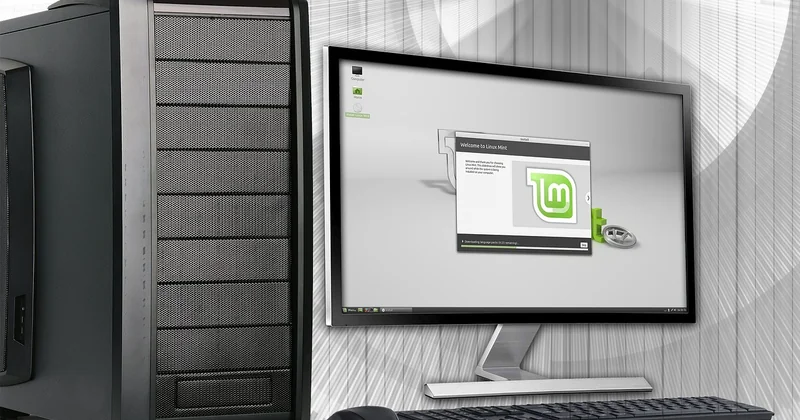
| Linux Mint | Privacy for normal people | No | Very high | Beginners leaving Windows or macOS |
The one column that matters most
Look at the third column again. Only two entries say "yes." That single line is the whole article. If your objective is genuine anonymity — meaning you want to be indistinguishable from any other user of the network — the list of candidates collapses to Tails and Whonix, plus Qubes if you deliberately bolt Whonix onto it.
Everything else is privacy. Good privacy, worth having, but privacy.
Which Linux distro is the most private and secure?
For architecture, Qubes OS wins. It doesn't try to secure one big system; it splits your work into isolated virtual machines, so a compromised browser in a red-tinted "untrusted" qube has no path to your email qube. That design survives mistakes that would sink a conventional desktop, and no amount of hardening scripts gets you there.
The catch is real, though. I set up Qubes twice before I actually kept it. The first time I gave up in frustration because I couldn't get a USB webcam to pass through, and I'll admit I had no idea what I was doing with the qube templates. The second time, with a proper hardware compatibility list and a bit more patience, it clicked. It took me the better part of a weekend and I still keep a separate cheap laptop for anything requiring a normal OS.
If you want "secure" without the Qubes curve
Fedora is my pick for the best default: SELinux enforcing out of the box, current kernel, signed packages, no account required during install, and telemetry that is opt-in and clearly disclosed. It's not anonymous, and it doesn't pretend to be. But if your threat is "I don't want a vendor profiling me and I don't want to run an unpatched system," Fedora is a solid, boring, defensible answer.
Debian deserves its reputation too. It's the distro that refuses to make choices for you, which means nothing gets collected by accident. That neutrality is a security feature in itself — but it also means the hardening is yours to do.
Which OS is best for anonymity?
Tails is the most practical answer for most people. It boots from a USB stick, forces every connection through the Tor network, and forgets everything when you shut it down. That "amnesia" is the feature: there's nothing left on the machine for a later forensic examination to find, and nothing to leak if the laptop is seized.

Whonix takes the same Tor-enforced principle and makes it livable. Your workstation VM can't learn your real IP address because it never touches the network directly — all traffic goes through a separate gateway VM. You get a persistent system without giving up the network anonymity layer.
The part nobody mentions
Both of these tools protect the network layer. Neither protects you from yourself. Log into an account tied to your real identity inside Tails and you've just paid for a bulletproof car and left the windows down. Anonymity is a discipline — separate identities, separate accounts, no cross-contamination, no personal habits bleeding through — and no distro will enforce it for you.
There's also the practical reality that Tor is slow, and some sites simply block exit nodes. Expect friction. If a tool promises anonymity with no friction, it's selling you something else.
What Linux distro do most hackers use?
The honest answer: the one that matches their target, and often several at once. In security circles you'll see Kali Linux constantly — it's the reference distribution for penetration testing, loaded with the standard toolset and widely documented in training material. But "hacker" covers very different jobs. A red-team operator lives in Kali or Parrot OS. A reverse engineer often runs a plain Debian or Fedora with custom tooling. Someone working in operational security for a high-risk organisation is more likely on Qubes.
Kali is worth a caution, though. It's designed as a live or dedicated offensive tool, and it's a poor daily driver: running it as your main desktop means running a system tuned for attacks as your personal machine, with root-friendly defaults you don't want near your email. I've seen people do it. It never ends well.
What is Linus Torvalds' favorite distro?
Torvalds has said publicly, more than once, that he uses Fedora on his own machines. It's a maintainer's choice — a distro with current packages, a clean relationship with upstream kernel development, and enough stability for someone who spends his day reviewing code rather than configuring desktops.
Treat this for what it is: convenience, not a privacy verdict. Torvalds is not making a threat-model recommendation, and he's said as much in his own commentary about distributions. Citing him as evidence that Fedora is "the most private" is a misreading. If he'd picked Qubes, that would mean something quite different.
So what should you actually install?
Depends entirely on who's looking at you, and I'd rather give you a decision rule than a ranking.
- Ordinary threat — ad networks, data brokers, an ISP logging your traffic: Fedora, Debian or Linux Mint with full-disk encryption enabled at install. You've solved 90% of the practical problem.
- You handle sensitive material and you're a target: Qubes OS, and prepare to lose a weekend. Add Whonix templates if you need the network layer.
- You need to be anonymous, specifically: Tails for one-off sessions, Whonix for sustained use. Don't try to make Debian do this.
- You just want out of Windows without losing your mind: Linux Mint. It's not a privacy statement, it's a good decision, and I'll defend that position.
The distribution matters less than the choice you make about your threat model. That sentence sounds flat, so let me make it concrete: two people with the same laptop, one running Mint with encryption and good habits, one running Qubes with a Gmail session open in the wrong qube — the first is better protected in almost every realistic scenario. The distro is the easy part. Knowing what you're defending against is the work.
And if you take nothing else from this: choose your distro last, after you've written down who you're hiding from and what happens if you fail. Most people discover, doing that exercise, that they need privacy and not anonymity — which is good news, because one of those is a weekend of work and the other is a way of life.